Colorado Gamma Sigma Leadership Curriculum

At Colorado Gamma, leadership is understood as the disciplined mastery of the self. The Sigma leadership philosophy emphasizes self-reliance, quiet influence, and intellectual independence. Unlike traditional leadership models grounded primarily in hierarchy or visibility, Sigma leadership is governed by judgment, discipline, and deliberate action.
Becoming a Sigma leader requires the development of self-leadership capacity, emotional intelligence (EQ), and Stoic discipline. These faculties enable individuals to make sound decisions, regulate emotional response, and maintain behavioral stability under conditions of uncertainty, pressure, and complexity.
Intelligence refines reasoning and problem-solving capability. Awareness sharpens perception, self-understanding, and contextual interpretation. When cultivated together, these faculties produce personal judgment, the capacity to interpret conditions accurately, regulate internal responses, and act deliberately.
Judgment governs self-leadership.
Judgment, however, does not operate autonomously. It must be observed, examined, and regulated.
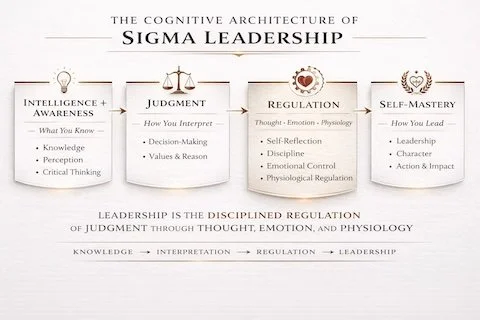
Meta cognition is the discipline of observing and regulating one’s own thinking processes. It governs how emotion is managed, how decisions are evaluated, and how judgment is refined over time.
Regulation is not purely cognitive. It is physiological.
Modern neuroscience has shown that judgment and emotional regulation are not governed by the brain alone. The heart and brain function as an integrated regulatory system connected through the autonomic nervous system and the vagus nerve.
The heart possesses its own neural network, sometimes referred to as the intrinsic cardiac nervous system. Through continuous communication with the brain, heart rhythms influence emotional processing, attention, and decision making. When emotional states become reactive, heart rhythm patterns become irregular, and the brain shifts toward stress-based responses. When the heart rhythm is calm and coherent, the brain regains clarity, stability, and executive control.
Self-mastery therefore requires more than intellectual discipline. It requires the ability to regulate internal physiological states that influence perception, emotion, and judgment.
Sigma leadership therefore requires more than intelligence, awareness, or discipline in isolation. It requires the capacity to examine internal responses, recognize cognitive bias, and regulate decision patterns in real time.
Judgment is not merely a product of intelligence.
Judgment is regulated through meta cognitive discipline.
Absent this regulatory capacity, intelligence may become reactive and discipline rigid. When properly developed, independence produces stability, and leadership becomes deliberate rather than impulsive.
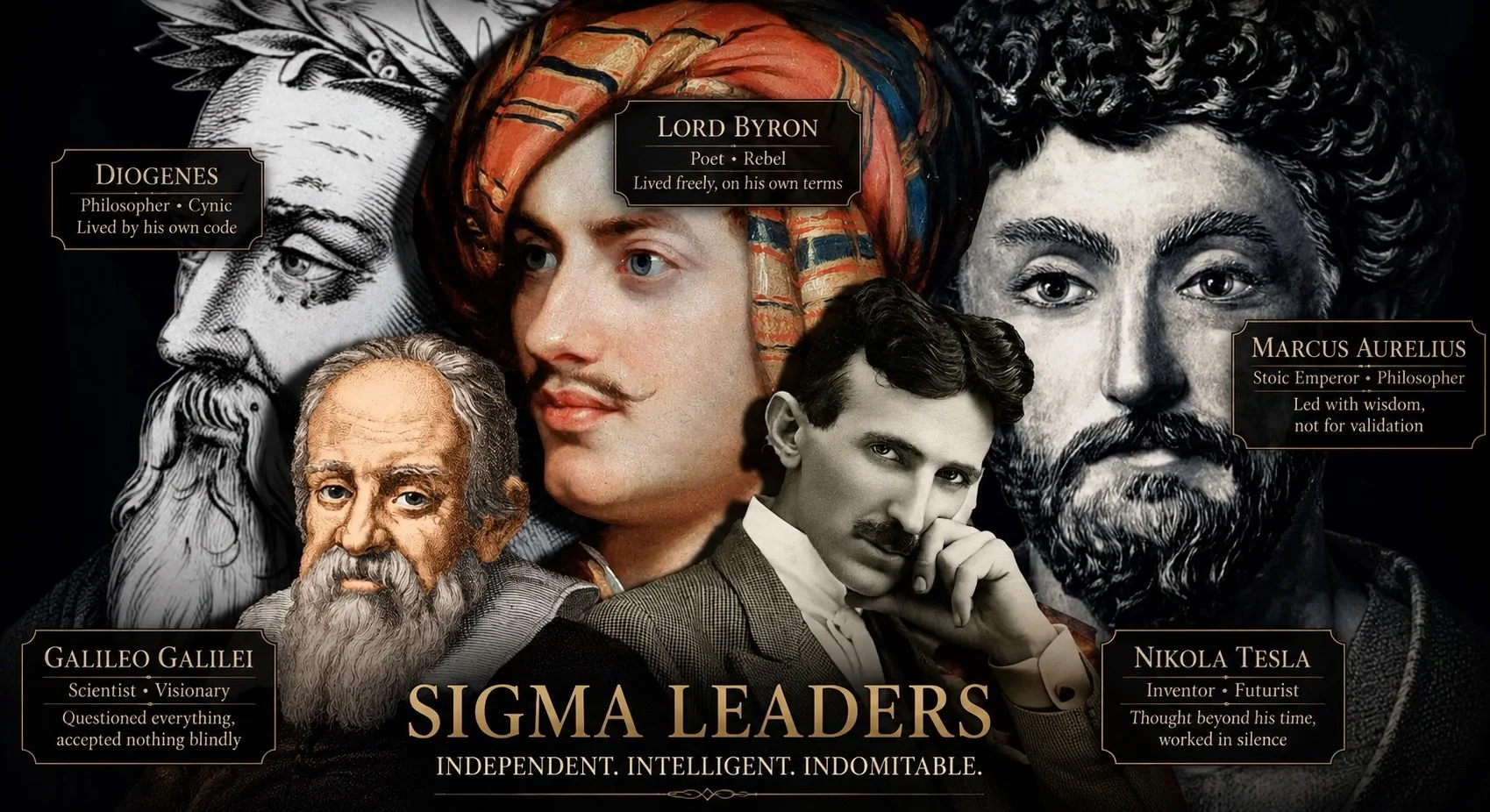
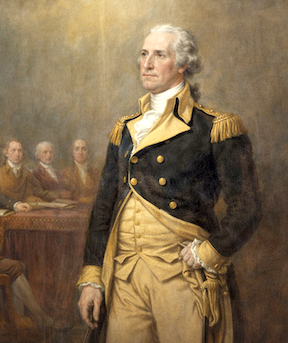
Throughout history, enduring leaders and thinkers have embodied these governing disciplines. Marcus Aurelius demonstrated judgment anchored in Stoic emotional regulation. Nikola Tesla exemplified independent cognition and intellectual self-direction. Leonardo da Vinci pursued disciplined inquiry across domains. Epictetus articulated principles of cognitive control and personal responsibility. George Washington modeled restraint, self-command, and deliberate leadership under sustained pressure.
Sigma leadership is not a personality construct. It is a discipline developed through deliberate practice.
To deepen your understanding of Sigma leaders and their leadership styles, explore the resources below.
Application and Development
Understanding Sigma leadership is only the beginning. Development requires deliberate application.
The guides and reflective exercises below cultivate the cognitive, emotional, and behavioral disciplines that govern judgment, emotional regulation, and self leadership.
These exercises are self paced and designed for serious personal engagement. Members who invest meaningfully in this work develop greater clarity of thought, emotional stability, and personal judgment.
Developed within Colorado Gamma as part of our commitment to leadership development, this material is intended for members who seek deeper personal growth.
Any member pursuing Sigma leadership, servant leadership, or personal mastery is encouraged to engage fully.
Guidance is available through the chapter’s mentors. Contact the Chapter Counselor for help finding your personal Sigma mentor.
Colorado Gamma Self-Mastery Guides & Journaling Exercises
Understanding Sigma leadership is only the beginning. Development requires deliberate application.
The guides and reflective exercises below cultivate the cognitive, emotional, and behavioral disciplines that govern judgment, emotional regulation, and self-leadership.
These exercises are self paced and designed for serious personal engagement. Members who invest meaningfully in this work develop greater clarity of thought, emotional stability, and personal judgment.
Developed within Colorado Gamma as part of our commitment to leadership development, this material is intended for members who seek deeper personal growth.
Any member pursuing Sigma leadership, servant leadership, or personal mastery is encouraged to engage fully.
Guidance is available through chapter’s mentors, contact the Chapter Counselor for help finding your personal Sigma mentor.
Self-Leadership Journaling

Self leadership is the discipline of regulating thought, emotion, and behavior. It governs how individuals interpret experience, make decisions, and maintain alignment between values and action.
Self awareness is the foundation of this discipline.
Through deliberate reflection, members examine the beliefs, motivations, and behavioral patterns that shape judgment and response.
Self-Leadership Journal Prompts
To deepen your self-awareness, reflect on your values, beliefs, and motivations.
Example Exercise
• What are your top five core values, and why do they matter to you?
• How do these values align with Virtue, Diligence, and Brotherly Love?
• What strengths can you leverage to contribute to the SigEp community?
Emotional Intelligence Journaling

Emotional intelligence (EQ) is the regulatory discipline governing emotional awareness, interpretation, and response. It shapes interpersonal judgment, behavioral stability, and decision quality under conditions of stress, uncertainty, and social complexity.
Like all leadership capacities, emotional intelligence is not an inherent trait. It is developed through deliberate observation, reflection, and self-regulation.
The exercises below cultivate the capacity to recognize emotional patterns, identify triggers, and refine behavioral responses.
Emotional Intelligence Reflection
After a challenging interaction:
• What emotions did you experience?
• How did you regulate those emotions?
• How could your response improve next time?
• What triggers influenced your reaction?
Stoicism Journaling

This 28-day challenge develops the four Stoic virtues: Wisdom, Justice, Courage, and Temperance. Each exercise strengthens judgment, emotional regulation, and deliberate decision making.
These virtues are not abstract ideals. They are governing disciplines that shape perception, behavior, and response.
Members who engage seriously in this work develop greater resilience, clarity of thought, and behavioral stability, capacities essential for leadership, relationships, and life beyond the university environment.
Key Stoic Principle
We cannot control events, only our responses.
Stoic Reflection
• How did you respond to challenges today?
• What was within your control?
• Where could greater discipline improve judgment?
Mastering self-leadership, emotional intelligence, and Stoicism forms the foundation of the Sigma leadership style. These disciplines cultivate independence, resilience, and quiet influence.
Heart Mind Self-Mastery Exercises
Modern neuroscience shows that judgment and emotional regulation are not governed by the brain alone. The heart and brain function as an integrated system through the autonomic nervous system and the vagus nerve. Heart rhythm patterns directly influence emotional state, attention, and decision making.
When internal states are reactive, judgment becomes distorted. When internal states are stable, clarity and control return.
Self mastery therefore requires the disciplined alignment of three internal capacities:
Thought
Emotion
Physiology
Development requires deliberate practice.
Exercises
Heart Rhythm Regulation
Develops physiological stability and emotional balance
Heart Mind Pause
Trains control of emotional reactions in real time
Heart Mind Awareness
Builds reflection and disciplined judgment
From Internal Discipline to External Behavior
The disciplines outlined above develop internal control.
They govern how individuals think, regulate emotion, and make decisions under pressure.
Leadership, however, is ultimately expressed through behavior.
How you carry yourself
How you respond to others
How you act when challenged
How you operate without recognition
The following guides translate internal self-mastery into observable patterns of behavior. They are not identity labels. They are practical frameworks that describe how disciplined individuals operate across social, professional, and leadership environments.
Becoming a Sigma Male Guide

Sigma leadership is expressed through observable behavior patterns rather than outward status or personality labels. It is reflected in how individuals regulate emotion, make decisions, manage social dynamics, and maintain independence under changing conditions.
This guide outlines the practical disciplines associated with Sigma leadership. The principles below are not prescriptions for identity, but behavioral frameworks that strengthen judgment, adaptability, self-command, and interpersonal effectiveness.
Development occurs through deliberate application. These practices are intended to be examined, tested, and refined through experience.
Mastering Silent Leadership Guide
Silent leadership is expressed through behavioral consistency rather than visibility, rhetoric, or positional authority. It is reflected in how individuals carry themselves, regulate emotional response, make decisions under pressure, and influence outcomes without reliance on dominance or attention.
This guide outlines the practical disciplines associated with silent leadership. These principles describe observable behaviors that strengthen presence, judgment, credibility, and strategic influence across professional, social, and organizational environments.
Silent leadership is not passive. It is deliberate, controlled, and situationally adaptive.